
“The future of hunting depends not merely on whether hunting is legal, but whether the public believes hunting is worthy of being legal.”
Rules of Fair Chase - Violations in Colorado
Colorado's furbearer regulations allow several methods that are difficult to reconcile with the traditional North American concept of Fair Chase, even when those methods are technically legal.
The important distinction is that “legal” and “fair chase” are not synonymous. Boone and Crockett explicitly makes that point: a legal method can still be unethical if it gives the hunter an improper advantage, and Fair Chase is fundamentally about giving the animal a reasonable opportunity to escape.
Pope and Young is even more explicit. Its current Rules of Fair Chase exclude animals taken by jacklighting, from traps, or through electronic devices used to attract, locate, pursue, or guide the hunter to game.
Colorado practices that deserve serious scrutiny
1. Artificial-light hunting — “jacklighting”
Colorado currently allows artificial light at night for beavers, raccoons, coyotes, bobcats, striped skunks and several fox species on private land with landowner permission. On public land, it is allowed with a CPW permit.
That is almost a textbook conflict with Pope and Young's Fair Chase rule, which specifically says Fair Chase does not include taking an animal by “jacklighting” or shining at night.
The ethical problem is obvious: nocturnal wildlife that normally relies upon darkness for concealment is suddenly illuminated and visually exposed. The hunter isn't merely improving visibility; the animal's primary defensive advantage—darkness—is removed.
2. Baiting furbearers
Colorado expressly allows furbearers to be taken with bait. The bait can include animal material, including carcasses or parts of legally taken furbearers and other wildlife.
This creates a significant Fair Chase question.
A hunter isn't necessarily pursuing a wild animal anymore. Instead, the hunter can establish an artificial food source and wait for the animal to come to it.
Boone and Crockett's Fair Chase philosophy specifically identifies artificial game attractants and feeders as practices that can undermine Fair Chase. It also emphasizes that the animal should have a reasonable opportunity to escape.
For predators such as bobcats and coyotes, baiting can be particularly problematic because it can concentrate animals at predictable locations.
3. Electronic calls
Colorado allows electronic call devices for furbearers.
This is another particularly interesting conflict with the standards established by the two organizations.
Pope and Young's Fair Chase rules prohibit electronic devices used for attracting, locating or pursuing game.
Boone and Crockett likewise identifies electronic game calls among technologies it excludes from its Fair Chase records for big game.
An electronic predator call can reproduce the sounds of prey or other animals continuously and at high volume without the hunter possessing the woodcraft or calling skill traditionally associated with predator hunting.
That doesn't automatically mean every use is biologically harmful—but it does raise a legitimate ethical question about whether the animal is being hunted or technologically summoned.
4. Live trapping
Colorado permits live traps—cage or box traps—for furbearers.
This is perhaps the clearest philosophical conflict after spotlighting.
Pope and Young explicitly states that Fair Chase does not include taking animals that are “helpless in a trap.”
The important distinction is that Colorado doesn't allow a hunter to simply shoot an animal caught in an illegal trap; there are rules governing inspection and dispatch. But from the animal's perspective, the fundamental problem remains: the animal has been captured and its ability to escape has been eliminated.
That is precisely the circumstance Fair Chase is intended to prevent.
5. Trapping creates a fundamentally different human–wildlife encounter
Colorado requires traps to be checked at least daily, and every 24 hours in certain lynx-related circumstances.
A trapped animal can therefore spend substantial time confined before the trapper arrives.
This is not necessarily a violation of Colorado law when the trap is legal and properly checked. But it is difficult to square the experience of an animal confined in a trap with the public's intuitive understanding of a “hunt.”
That distinction matters enormously for public acceptance.
Boone and Crockett says Fair Chase is an ethical code that extends beyond the minimum requirements of law and warns that practices once considered unacceptable can erode hunting ethics and public support for hunting.
6. The use of technology to replace woodcraft
The issue isn't necessarily whether a particular piece of technology is inherently bad. It is whether technology fundamentally changes the balance between hunter and hunted.
Pope and Young describes Fair Chase as pursuing free-ranging wild game without giving the hunter an improper or unfair advantage.
And Boone and Crockett makes essentially the same philosophical argument: the hunted animal should have a reasonable opportunity to escape.
So you can evaluate Colorado's furbearer regulations against a simple question:
Does this method require the hunter to develop greater knowledge, skill, patience and woodcraft—or does it substantially eliminate the animal's natural advantages?
An excellent example of this is using an Ozonics device in a hunting blind or from a tree stand where the human scent is basically eliminated. This prevents the animal being pursued to use its sense of smell to determine if a dangerous situation exists.
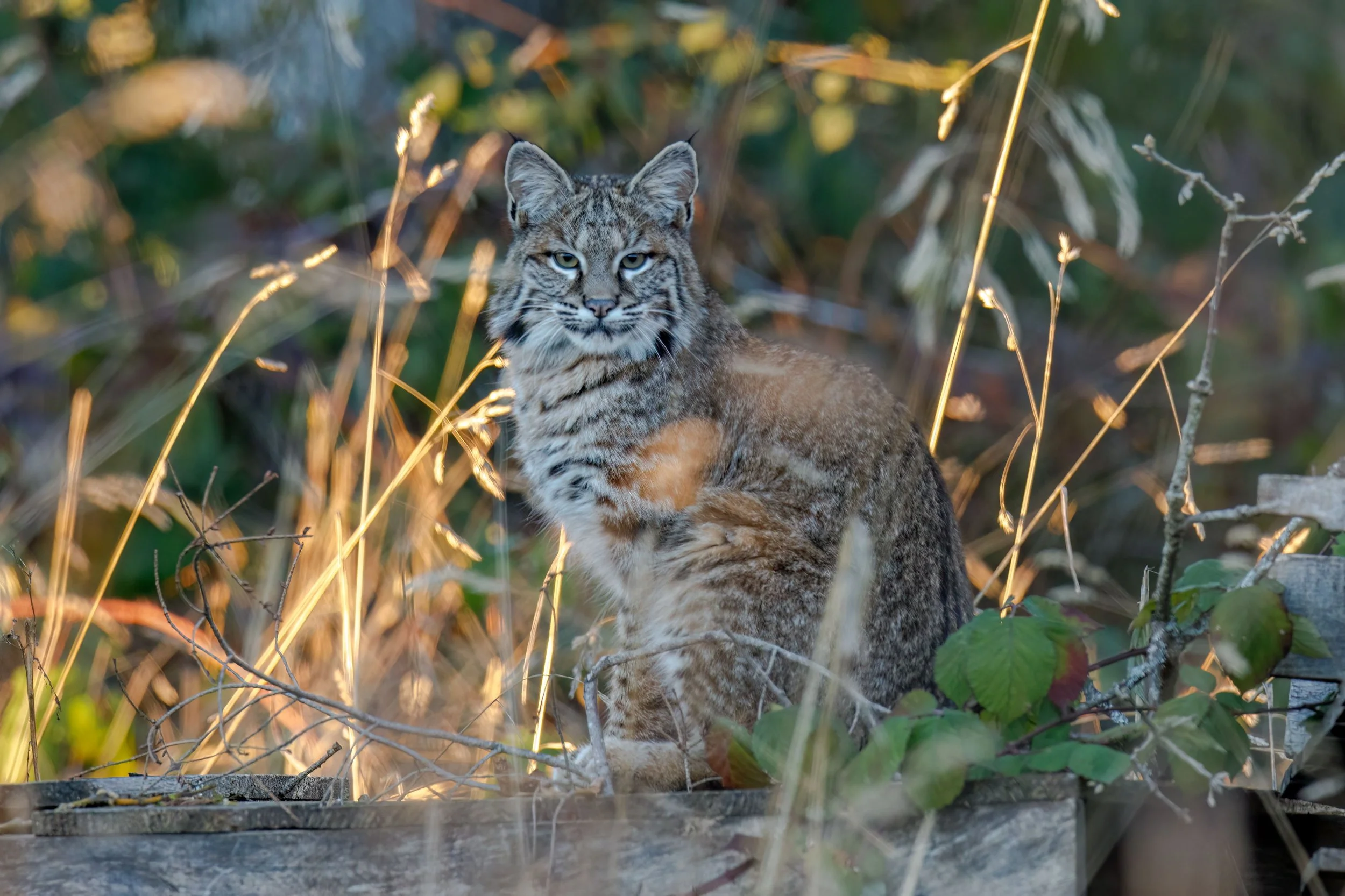
One especially important issue: bobcats
Colorado's bobcat season runs from December 1 through the end of February, and harvested bobcats must be inspected and sealed.
Yet Colorado simultaneously allows several methods that can dramatically increase the hunter's advantage:
artificial light at night;
bait;
electronic calls;
firearms;
live traps;
.25-caliber-or-larger pre-charged pneumatic air guns.
And there is an additional ecological concern: bobcats and Canada lynx can be difficult to distinguish, which is why CPW specifically warns hunters and trappers about mistaken lynx captures. CPW notes that the species have overlapping range and similar appearance and habits.
That makes the use of nighttime hunting and trapping methods particularly worthy of examination.
The larger problem: Colorado's regulations may be legal, but are they defensible?
Colorado's wildlife regulations should establish a standard of hunting ethics that protects wildlife, protects the reputation of legitimate hunting, and maintains public confidence in the North American Model of Wildlife Conservation.
And Boone and Crockett itself provides support. Its Fair Chase statement says hunters have historically “policed themselves” ethically and that fair chase extends beyond written law. It explicitly says that something being legal does not automatically make it fair chase.
Pope and Young goes even further by identifying the exact practices at issue here—trapping, jacklighting and electronic devices used to attract or locate game—as outside its Fair Chase standard.
Recommended Changes in Colorado
1. No hunting wildlife with artificial light.
If darkness is part of an animal's natural defense, hunters should not be permitted to remove that advantage.
2. No baiting of predators and furbearers.
Wild animals should be pursued rather than conditioned to artificial food sources.
3. No electronic calling where it provides a disproportionate technological advantage.
4. No killing animals that have been rendered helpless by traps.
If trapping remains legal for management purposes, it should be treated separately from “Fair Chase hunting,” rather than conflated with it.
5. Regulations should establish a higher ethical standard than the bare minimum necessary to make an activity legal.
The future of hunting depends not merely on whether hunting is legal, but whether the public believes hunting is worthy of being legal.
Boone and Crockett has actually articulated this concern itself, warning that erosion of hunting ethics can damage public support for hunting.
Colorado should not merely ask whether a method is legal. We should ask whether it reflects the ethical tradition that has allowed hunting to remain a respected part of wildlife conservation.